
For months now, economic reports in Ghana have carried a somewhat encouraging message: inflation is falling. After peaking during the country’s recent economic crisis, the rate at which prices are increasing has begun to slow. On paper, this is good news for the economy and for households struggling with rising costs.
Yet for many Ghanaians, the reality feels very different.
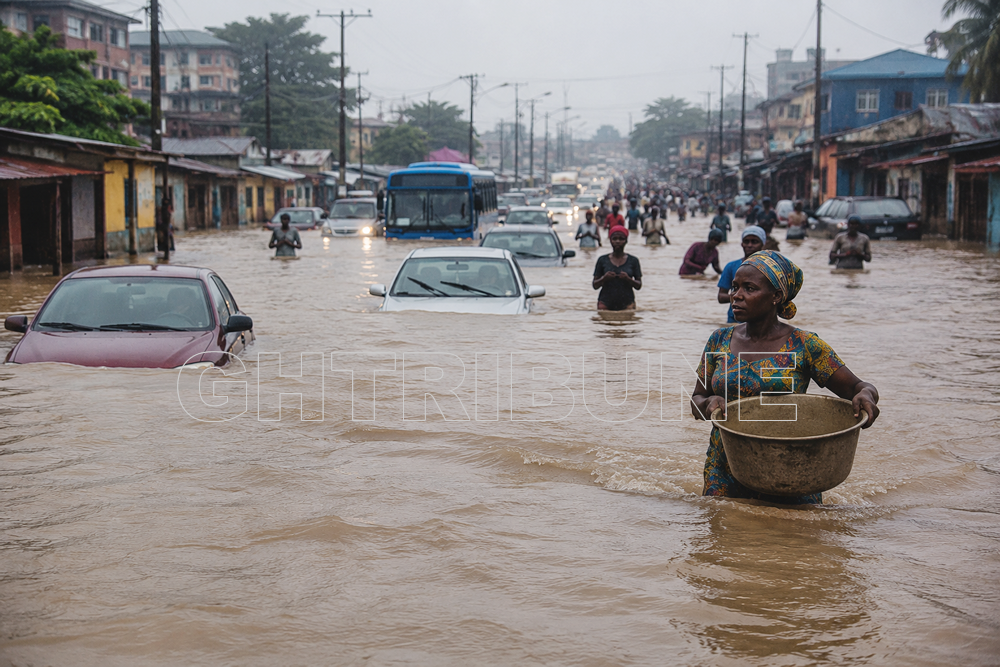
Across markets, transport stations, and shops, the common complaint remains the same: everything still feels expensive. Food prices remain high, transportation costs continue to strain daily budgets and rent and utility bills leave many families with little room to breathe financially.
So if inflation is dropping, why don’t people feel the difference?
The answer lies in understanding what inflation actually measures.
Inflation does not mean that prices are falling. Instead, it measures how fast prices are increasing. When inflation declines, it simply means prices are rising more slowly than before, not that they are returning to previous levels.
For example, if the price of a bag of rice rose from GH¢200.00 to GH¢300.00 during a period of high inflation, a drop in inflation does not mean that the price will fall back to GH¢200.00. Instead, the price may increase more slowly; perhaps from GH¢300.00 to GH¢320.00 rather than jumping to GH¢350.
In other words, prices stabilize at a higher level, which is why many consumers still feel the pressure even as inflation falls.
Another important factor is the cumulative effect of previous price increases. During the past few years, Ghana experienced significant economic shocks, including currency depreciation, rising import costs and global supply disruptions. These pressures pushed up the cost of many essential goods, particularly food and fuel.
Once these price increases occur, they rarely reverse completely.
The cost of transportation provides a clear example. Fuel prices rose sharply when the Ghanaian cedi weakened and global oil prices climbed. Transport operators increased fares to cover these higher costs. Even if fuel prices later stabilize, transport fares often remain elevated because operators must still manage maintenance costs, spare parts and other operational expenses.
Food prices tell a similar story. Ghana relies heavily on imported inputs such as fertilizers, poultry feed and machinery. When the cedi weakens or import costs rise, farmers and traders pass those costs on to consumers. Even after economic conditions improve, it takes time for the effects to filter through the entire supply chain.
There is also the issue of income growth. While prices rose rapidly in recent years, wages and salaries in many sectors have not kept pace. As a result, purchasing power has declined. Even if inflation slows, households still feel poorer because their incomes do not stretch as far as they once did.
Economic recovery therefore takes time to translate into real improvements in living standards.
Government officials and economic analysts argue that continued stability in inflation, exchange rates and fiscal policy could gradually restore confidence in the economy. Lower inflation can create a more predictable business environment, encourage investment and eventually support job creation.
However, for the average Ghanaian household, what matters most is not the inflation rate itself but the actual prices they pay every day.
Until wages improve and the cost of essential goods stabilizes more meaningfully, many citizens will continue to feel the strain of high living costs.
The lesson from Ghana’s recent experience is clear: economic indicators may signal recovery, but real relief for households depends on how those improvements translate into affordable food, transport, housing and employment opportunities.
For now, the numbers may be improving, but for many families, the cost of living remains a daily challenge.

No.9 Korley Kofi Ave, East Airport - Accra
+233(0)504817488





© The GH Tribune. All Rights Reserved. UI by HTML Codex | Powered By: GH Tribune