
Illegal mining, popularly known as galamsey, has become one of the most contentious and complex issues facing Ghana today. What began decades ago as small-scale informal mining has evolved into a national crisis affecting the environment, public health and the country’s long-term economic future.
Despite repeated government interventions, the question remains: can Ghana truly win the fight against illegal mining?
The scale of the problem is significant. Ghana is one of the world’s leading producers of gold and the precious metal remains a major contributor to the country’s economy. However, the same mineral wealth that supports economic growth has also fueled widespread illegal mining activities across several regions.
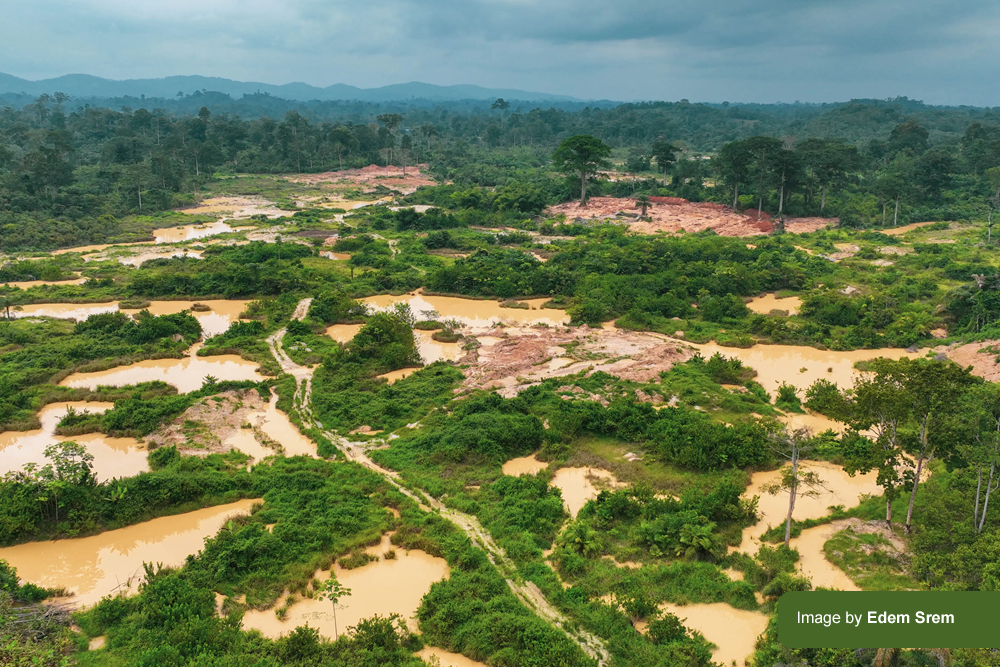
In many communities, rivers once used for drinking water and farming have been heavily polluted by mining chemicals and sediment. Forest reserves have been degraded and agricultural land has been destroyed in the pursuit of gold.
The environmental consequences are severe. Key water bodies, including rivers that supply water treatment plants, have been affected by illegal mining operations. Water treatment companies often face higher purification costs because of the level of contamination in raw water sources.
Beyond environmental damage, galamsey has also created social and economic challenges.
Many young people in rural areas are drawn to illegal mining because it offers quick financial returns compared to farming or other traditional livelihoods. For individuals struggling with unemployment or limited opportunities, the promise of gold can be difficult to resist.
This reality makes enforcement alone an incomplete solution.
Successive governments have launched various initiatives aimed at curbing illegal mining, including task forces, equipment seizures and mining bans in sensitive areas. While these efforts have occasionally reduced illegal activities temporarily, the problem often resurfaces once enforcement efforts weaken.
Critics argue that the fight against galamsey is complicated by political and economic interests. Allegations frequently emerge that influential individuals or networks benefit from illegal mining operations, making consistent enforcement difficult.
At the same time, the issue is not entirely black and white.
Small-scale mining itself is a legitimate economic activity when properly regulated. Ghana’s mining laws allow licensed small-scale miners to operate legally. The challenge lies in ensuring that mining activities follow environmental regulations and that operators obtain the necessary permits.
Some experts believe the solution lies in strengthening the formalization of small-scale mining.
By providing clear licensing pathways, training miners in environmentally responsible practices and monitoring operations more effectively, authorities may be able to reduce illegal activities while still supporting livelihoods.
Others argue that Ghana must also invest more heavily in alternative employment opportunities for young people in mining communities. If rural youth have access to viable jobs in agriculture, manufacturing or local industries, the appeal of illegal mining could decline significantly.
Technology may also play an increasing role in monitoring mining activities. Satellite imagery, drones and digital tracking systems can help authorities detect illegal mining sites more quickly and respond before environmental damage becomes extensive.
Ultimately, the battle against galamsey will require more than periodic enforcement campaigns. It demands a comprehensive strategy that combines strong regulation, community engagement, economic alternatives and political will. Ghana’s mineral resources are a valuable national asset. Protecting the environment while harnessing those resources responsibly is essential for the country’s future.
Whether Ghana can win the fight against illegal mining remains uncertain. But what is clear is that the cost of inaction; polluted rivers, destroyed forests and lost agricultural land, is far too high to ignore.
The challenge ahead is not simply to stop galamsey, but to build a system where Ghana’s natural wealth benefits the nation without destroying the environment that sustains it.

No.9 Korley Kofi Ave, East Airport - Accra
+233(0)504817488



© The GH Tribune. All Rights Reserved. UI by HTML Codex | Powered By: GH Tribune